
Guide and advice on choosing fabrics and needles for punch needlework

Punch needle is an embroidery technique that combines tradition and modernity, offering endless creative possibilities for artists of all levels. It allows you to create three-dimensional textures and unique designs, but the success of a project depends largely on the choice of materials . Fabrics and needles play a fundamental role: understanding the right ones not only ensures quality work but also reduces the difficulties that can arise during the creative process.
In this article, we'll explore the most suitable materials and their characteristics, providing practical advice for every type of project.

The most used fabrics
Choosing the fabric is a crucial step in embroidery with the Magic Needle, because it represents the basis of your work.
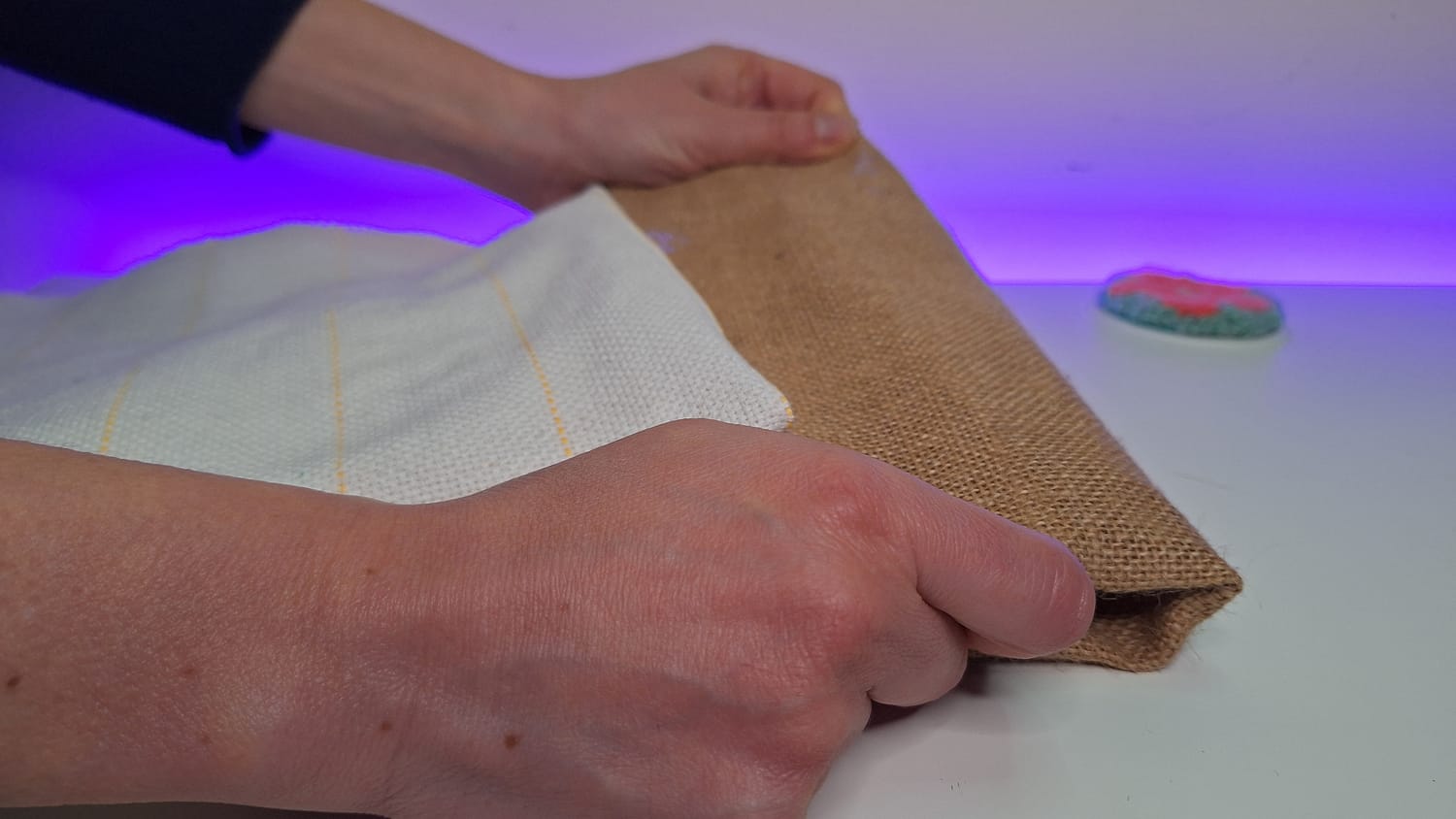
For beginners, Monk's Cloth is often the best choice: its open weave makes it easy to pierce , and if you're working on large projects like rugs or cushions , it's one of the most practical solutions. Alternatively, you can use jute , a sturdy, more "rustic" fabric: it can be less flexible than Monk's Cloth and therefore harder to pierce .
For precision or detailed work , however, materials like raw cotton and linen are more suitable. Of the two, I especially recommend linen because it offers a good balance between flexibility and the ability to maintain tension, making it suitable for medium-complexity projects.
A very well-known fabric in the world of embroidery is Aida cloth , which however requires a little more care to be used to its full potential.

To each needle its own fabric!
The punch needle's quintessential tool is the needle itself. Its choice should be based on the type of fabric and the thread used. Medium-large needles , for example those over 3 mm , are ideal for loosely woven fabrics : they allow the use of thicker threads and create bulkier projects with more pronounced textures.
Conversely, fine needles are more suitable for tightly woven fabrics, such as linen or denim , and allow you to work with precision on smaller, more detailed works.
Using the correct needle not only makes your work smoother, but also prevents damage to the fabric and compromising the quality of the embroidery.

Managing fabric tension
An often overlooked aspect in the world of magic needlework is fabric tension .
Not all fabrics behave the same way when stretched on the loom. It's essential to maintain a high and stable tension throughout the entire process, but some fabrics tend to sag more easily, such as Aida . To reduce this problem, it's helpful to use high-performance looms or, when possible, change fabrics. Monk's Cloth , in my experience, provides the best tension on many looms.

Common mistakes and how to avoid them
Even with punch needlework, there are common mistakes that can compromise your work. A typical example is using a needle that's too large on a tightly woven fabric: it can cause tears or make punching difficult. Likewise, choosing the wrong fabric for the project or failing to ensure proper tension on the fabric can result in embroidery that's difficult to manage.
Take the time to prepare the right materials and do a few tests before starting a complex project. Maintaining your tools is also essential: clean, well-maintained needles last longer and ensure better results. Store your fabrics in a dry place to avoid damage or discoloration.
Personal considerations and preferences
Choosing the right needle and fabric is essential if you want to achieve quality punch needlework. Knowing the characteristics of your materials helps you make more informed choices, keeping the thread securely attached to the canvas and ensuring your project retains its shape over time.
Of all the fabrics I've tried, linen and Monk's Cloth are my favorites for quality and versatility.
- Linen is elegant, with a strong yet delicate texture: perfect for small to medium-sized projects, where precision and refinement make the difference.
- Monk's Cloth is irreplaceable for larger works: its softness and regular grid make it ideal for geometric designs and guarantee optimal tension on the frame.
If you want to try these materials, you can find them here:
- Monk's Cloth: https://iltappetomagicodisilvia.it/collections/tessuto-panno-del-monaco
- Linen: https://amzn.to/4g7UDZV
To learn more, I invite you to watch my dedicated video on YouTube: https://youtu.be/He1A_t3YxaY .
I'm sure that once you try them, you'll appreciate these fabrics as much as I do!
FAQ
What is the best fabric to start punch needlework with?
If you're just starting out, Monk Cloth is generally the easiest choice: it has an open weave, is easy to pierce, and holds tension well on the loom. It's especially ideal for larger projects like rugs and cushions.
Can I use the punch needle on any type of fabric?
No. You need fabrics that can be pierced without tearing and that hold the thread well. If the fabric is too thick or stiff, you risk difficulty and tears; if it's too loose, it may lose tension. The rule of thumb is: fabric, needle, and thread must be compatible.
What is the difference between linen and Aida for punch needle?
Linen is excellent for more precise work: it has a tight weave and good hold, making it suitable for small to medium-sized, detailed projects. Aida is common but tends to sag more easily under tension on the loom and requires more care (and a good-quality loom).
Which needle should I use for punch needlepoint on Aida?
For Aida, a thinner needle (not a "carpet" needle) and a finer thread are better, as they reduce stress on the weft and improve precision. A needle that's too large for Aida increases the risk of tearing and makes piercing more difficult.
Is jute a good choice for large projects?
It can be good because it's sturdy, but it's often less flexible than Monk's Cloth and therefore harder to pierce. If you're looking for smoothness and ease, Monk's Cloth remains the most convenient choice; jute is excellent if you like a rougher look and are willing to take on a slightly more demanding job.
Do you also want to learn to embroider with Ago Magico like a pro?
Join my community! Follow me on Instagram and YouTube . I regularly post content and practical tips on how to get started or develop your punch needle technique.
On my website www.iltappetomagicodisilvia.it you'll find tutorials, video guides, and helpful courses to improve your skills.
Finally, I want to share my thoughts with you: punch needlework is a versatile and accessible technique, suitable for all levels, perfect for sparking creativity. With the right tools and a little practice, anyone can create beautiful decorative projects, cultivating a healthy, enjoyable, and relaxing hobby.

0 comments