
Punch Needle Frames (Magic Needle): The Ultimate Guide to Perfect Tension

The hoop is an often overlooked element, yet it plays a crucial role in the final result. Proper canvas tension is essential for clean, precise embroidery. In this first of two articles dedicated to hoops, we'll explore the different options available, from the most common round hoops to sturdier alternatives.
Round Frames: Economical but with Limitations
Round hoops, readily available and inexpensive, are often the first choice for those new to embroidery. They're the classic hoops used for traditional embroidery , and while they can also be used with a magic needle, they're not the ideal solution.
The main problem lies in their ability to maintain tension on the canvas. The punching motion of the magic needle, which is quite forceful, tends to loosen the canvas, requiring constant interruptions to re-tension it.
Despite this flaw, I often use round frames myself, especially for small projects. However, it's important to be aware of this limitation.

Reinforced Round Frames: The Ideal Solution
There are round frames very similar to traditional ones, but decidedly more sturdy and capable of maintaining optimal canvas tension. The main difference lies in their structure:
-
Higher Height: They are taller than standard round frames.
-
Reinforced screw system: They feature a larger and more robust screw.
-
Internal step: They have an internal step or step that "brakes" the canvas and holds it firmly in place during punching.
These frames, although more expensive and not easily found in physical stores (I purchased one on Amazon at this link ), offer significantly superior stability and tension, allowing you to work more fluidly and precisely.

Stapled Wooden Frames: A Great Alternative for Larger Projects
Another interesting alternative, especially for larger projects, is wooden frames . These, however, require the use of a wood stapler.
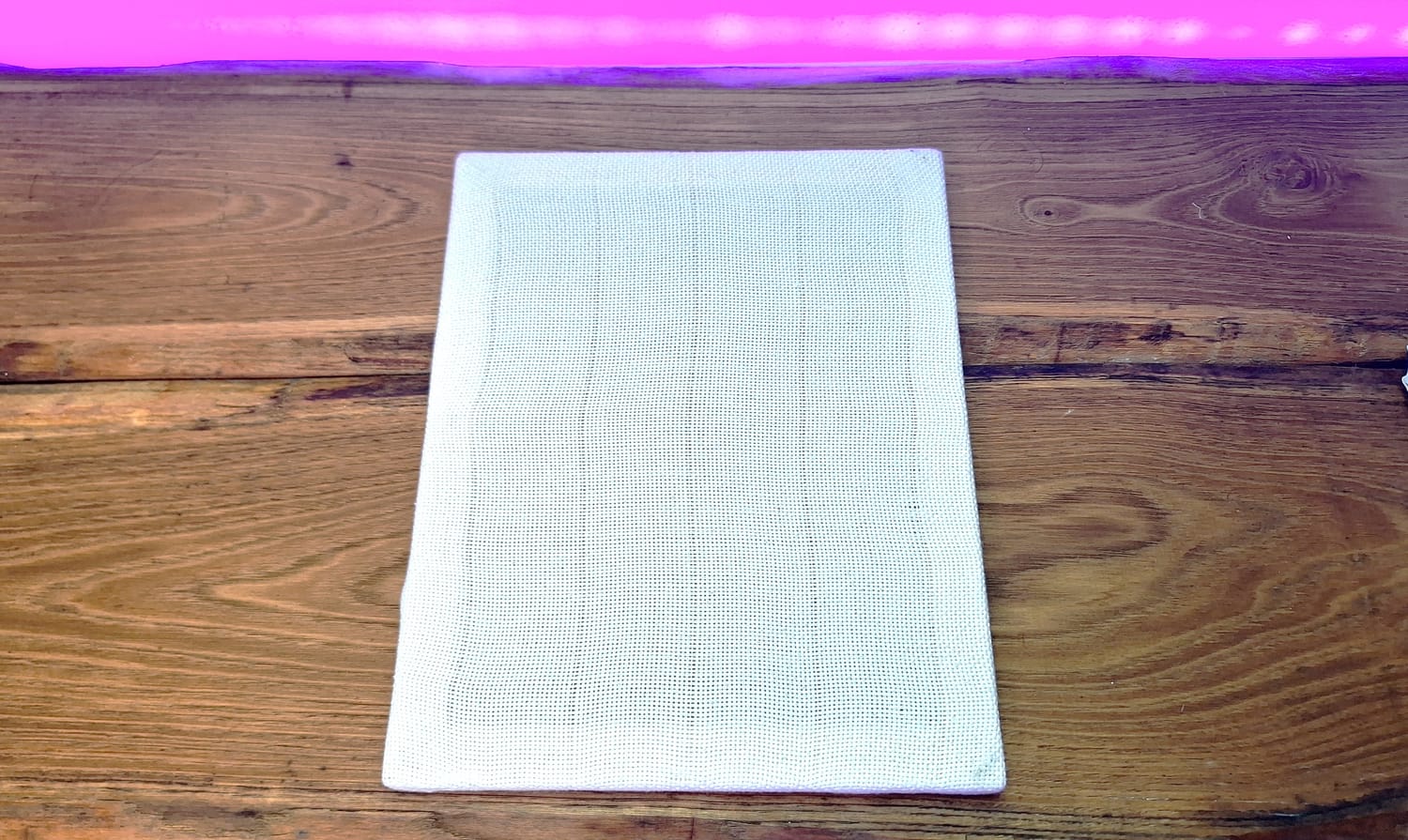
The process is simple: lay the canvas on the frame and begin pinning, first one side and then the other, taking care to taut the canvas before each pin. This way, you get a perfectly taut canvas that will maintain its tension throughout the project.
The following is a frame that I make exactly this way, starting from the wooden frame and stapling the canvas.
Conclusions
For small projects , round frames can be fine, but for larger projects or for those looking for optimal tension, I highly recommend reinforced round frames or wooden frames with staples. In my next article, I'll delve deeper into wooden frames suitable for large projects, but if you'd like a preview, I recommend checking out this video from my YouTube channel.
Do you also want to learn to embroider with Ago Magico like a pro?

0 comments