
What is the Magic Needle? (Punch Needle)

Over time, the art of embroidery has evolved several times, adapting to cultural and technological changes. One of the most fascinating techniques is the punch needle (or magic needle) . ): a method with ancient origins, increasingly popular today for its versatility and the ease with which it allows you to create designs and textures.

A brief historical note
Punch needle has ancient origins, originating in Asia and the Middle East . Thousands of years ago, artisans created a primitive form of magic needle that has been perfected over the centuries. In the 18th and 19th centuries , it became common in Europe and North America , especially for rugs and blankets . In the 1970s and 1980s, with the boom in home crafts, it came back into vogue, and today, thanks to social media, it is among the most popular embroidery methods.
...but what is it exactly?
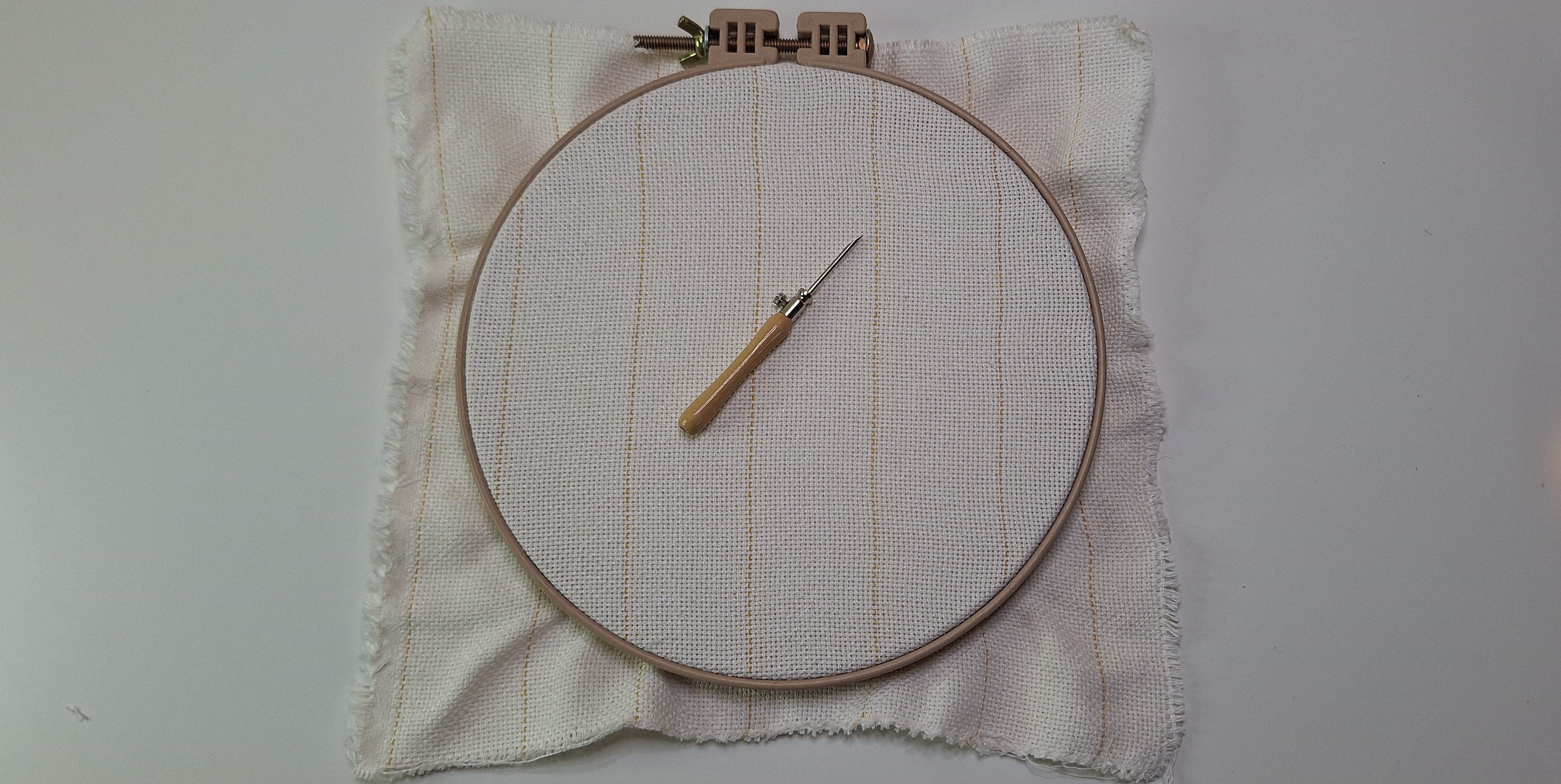
The Punch Needle is an embroidery tool consisting of a solid handle and a hollow needle through which the thread passes. It allows you to repeatedly "punch" the fabric, working on the opposite side of the hoop and creating delicate loops. This "carpet effect" has made the punch needle very popular, although other techniques and effects exist, such as the "satin stitch."
The main materials needed to start embroidering with the punch needle are:
- The Magic Needle: the main element, available in different sizes depending on the thread and fabric.

- The Yarn: wool, cotton, acrylic, polyester or alternative materials such as ribbon and chenille (I also tried raffia and plastic strips: if you're curious, look here ).

- The Frame: essential for keeping the fabric taut and making it easier to create stitches.
- A Canvas: For medium to large embroidery, I recommend Monk's Cloth (but jute is also fine). For smaller projects, linen or heavy cotton are also good choices.

The Embroidery Process - In Simple Words
It all starts with tracing the design onto the fabric . I often use an overhead projector , but you can also lean against a well-lit window.
After tracing the design, you have to stretch the canvas very well on the frame , almost like a drum: this way the stitches don't remain loose and don't risk coming undone.
At this point, insert the needle into the canvas and, as if it were a pen, “prick” the fabric all the way through, following the lines of the design.
Why choose the Punch Needle?
- Ease of use — It's an accessible technique: even those starting from scratch can achieve beautiful results without learning complex steps.
- Speed — Compared to traditional embroidery, it is much faster: projects that last weeks can become days or hours.
- Versatility — You can create rugs, pillows, paintings, magnets, wall decorations, clothing, and much more. Different threads and fabrics open up endless possibilities.
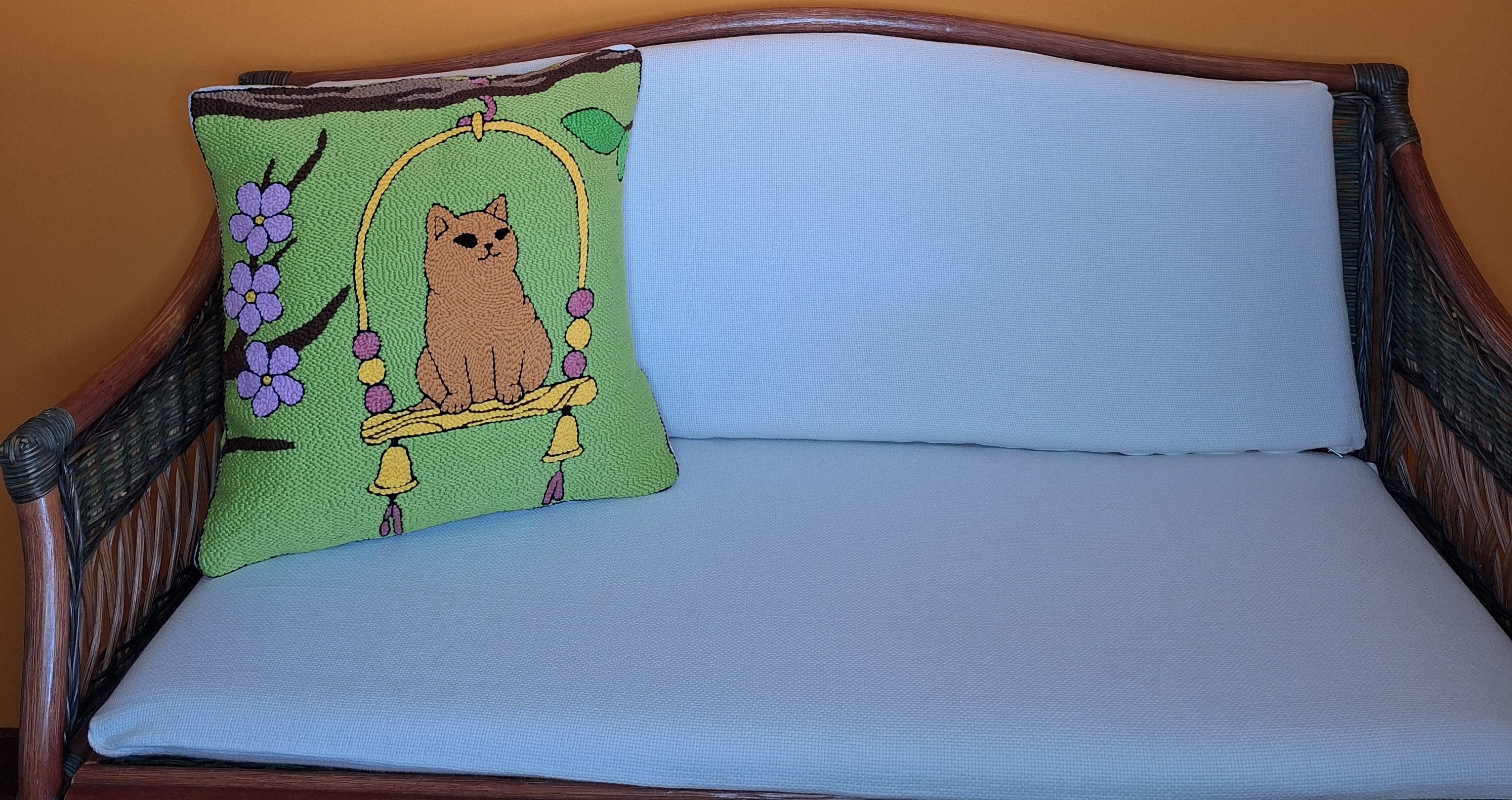
Any tips for successful embroidery?
- Always keep the thread taut — This prevents the stitches from loosening and coming apart.
- Experiment with needle sizes — Thicker needles fill more, smaller needles are perfect for details and finishing.
- Practice regularly — Like any skill, it improves with consistency.
- Wash your artwork gently — Best to hand wash and air dry to avoid damage and discoloration.
Do you also want to learn to embroider with Ago Magico like a pro?
Join my community! Follow me on Instagram and YouTube . I regularly post content and practical tips for getting started or improving your technique.
On my website www.iltappetomagicodisilvia.it you'll find tutorials, video guides, and courses to help you progress.
In conclusion, punch needlework is a versatile and accessible technique, suitable for all levels. With the right tools and a little practice, anyone can create decorative projects and develop a pleasant and relaxing hobby.

Punch needle art offers endless possibilities: grab your magic needle, choose your favorite threads, and start creating something unique.
0 comments